Ideal Tridon > Case Study
Increasing Welding Throughput to 900 Parts per Day with a Custom Robotic Weld Cell
Executive Summary
A U.S.-based global leader in worm gear, t-bolt, band, strut, specialty clamps, hose supports, conduit, and fastening solutions, as well as fittings and couplings partnered with United Robotics to overcome throughput constraints, skilled labor shortages, and inconsistent weld quality. Facing increasing customer demand in a highly commoditized market, the company required a scalable automation solution that could improve output without adding headcount. United Robotics delivered a custom ABB robotic welding cell with purpose-built tooling, enabling multi-part welding per cycle, improved consistency, enhanced safety, and a clear path to meeting aggressive production targets.

Customer Background
The customer is a mid-sized manufacturer producing high-volume construction and utility brackets under the Ideal Tridon brand. Operating in a competitive, lead-time-driven market, the business wins orders by delivering consistent quality at speed.
- Industry: Construction / Utility Components
- Employees: Approximately 170
- Location: Smyrna, Tennessee
- Production Environment: High-mix, high-volume welded components
The Challenge
As demand increased, the customer faced several compounding challenges including throughput limitations, skilled welding labor shortages, inconsistent weld appearance across operators, rework and scrap risk, long and variable cycle times, safety and ergonomic concerns, and rising labor costs. Manual welding and an existing robotic setup were no longer sufficient to meet production goals or future growth requirements.
The Solution
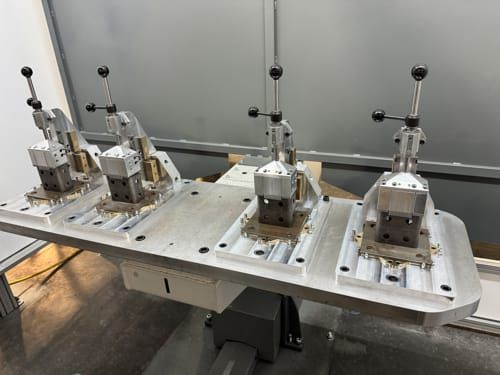
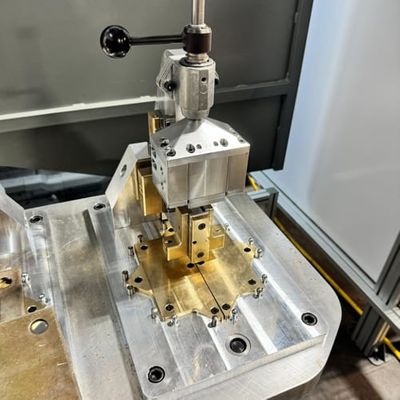
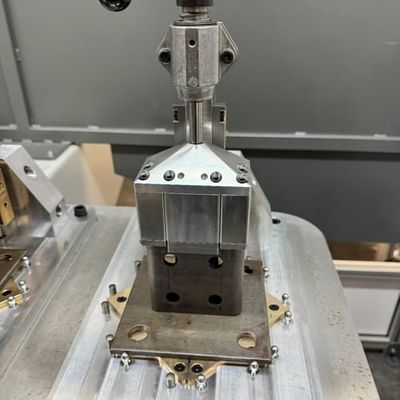
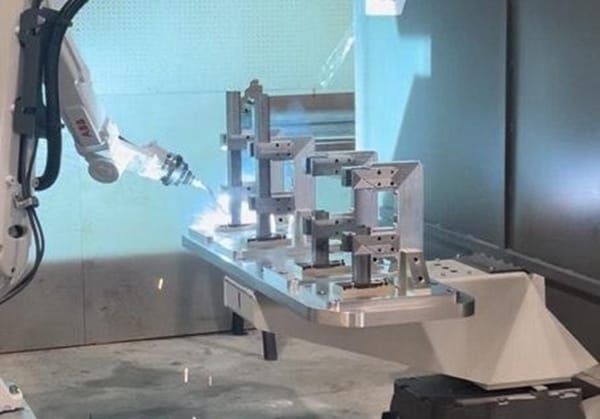
United Robotics designed and delivered a custom ABB robotic welding cell tailored to the customer’s production needs. The solution featured multi-part tooling for welding multiple components per cycle, an ABB robotic welding platform optimized for repeatability, an enclosed safety fencing system with improved fume extraction, and iterative tooling design to balance adaptability with dependable function. The system integrated seamlessly into existing workflows and was purpose-built rather than off-the-shelf.
Implementation & Adoption
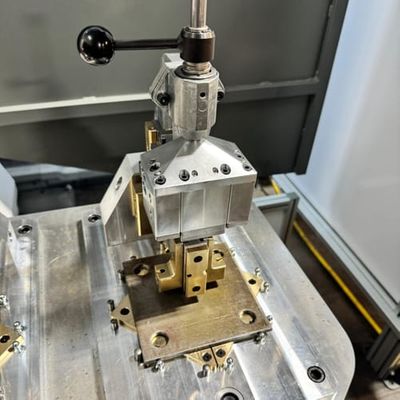
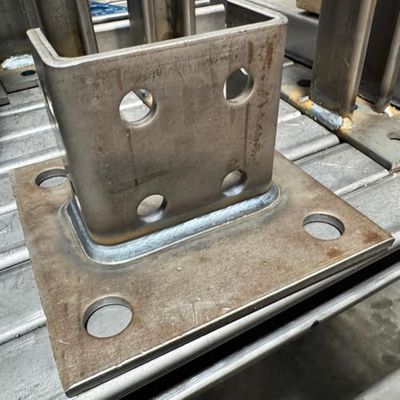
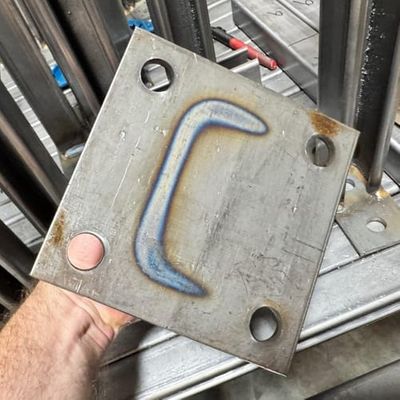
United Robotics collaborated closely with the customer through multiple tooling design iterations to ensure optimal performance and operator confidence. The system integrated smoothly into the production floor, reduced operator variability, improved weld consistency and appearance, enhanced safety through enclosure and fume control, and allowed operators to focus on higher-value tasks. Adoption was rapid with minimal disruption.
Results & Measurable Impact
Cycle Time Improvements:
- Manual welding: 2–4.5 minutes per part
- Existing robotic system: 1 minute per part
- United Robotics system: 4 parts welded in approximately 1.5 minutes
Throughput Capability:
- Target output of 900 parts per day across two shifts
- Ability to support a 105,000-part order over five months
Quality and Safety Improvements:
- Improved weld consistency and appearance
- Reduced rework and scrap risk
- Enhanced fume extraction and improved operator safety
Customer Feedback
“The United Robotics team has been a dream to work with. They understood our mission and delivered the right system for our production needs. It was a breath of fresh air to have a team listen and improve on multiple design iterations for our custom tooling. The result was a tooling package with just the right amount of adaptability and dependable function.”
- Jim Beyers
- Plant Engineer, Ideal Tridon Group
Strategic Impact
With the robotic welding cell in place, the customer is positioned to compete more effectively on lead time, scale production without adding skilled labor, maintain consistent quality in a commodity market, and establish a foundation for future automation expansion.
Call to Action
Looking to increase throughput without increasing headcount? United Robotics designs custom robotic welding solutions that deliver real, measurable production results. Contact United Robotics to explore how automation can support your operation.
Automation and site work by Kre8ive Studio